
STEERING ANGLE SENSOR (SAS) CALIBRATION IN BS6 VEHICLES
Steering Angle Sensor (SAS) calibration is a critical requirement in modern BS6 vehicles, especially BS6 Stage 2 (RDE) models. This blog explains what SAS calibration is, why it is mandatory after wheel alignment, and how advanced systems like Electronic Stability Control (ESC), Advanced Driver Assistance Systems (ADAS) and yaw rate sensors depend on accurate steering data. Learn the difference between BS6 Stage 1 and Stage 2, why advanced On-Board Diagnostics (OBD) systems are more sensitive, and how skipping SAS calibration can cause steering pull, warning lights and safety issues. A must-read guide for understanding safe, stable and compliant driving in BS6 vehicles.
TYRES IN GUWAHATI
ONE PITSTOP
1/6/20263 min read
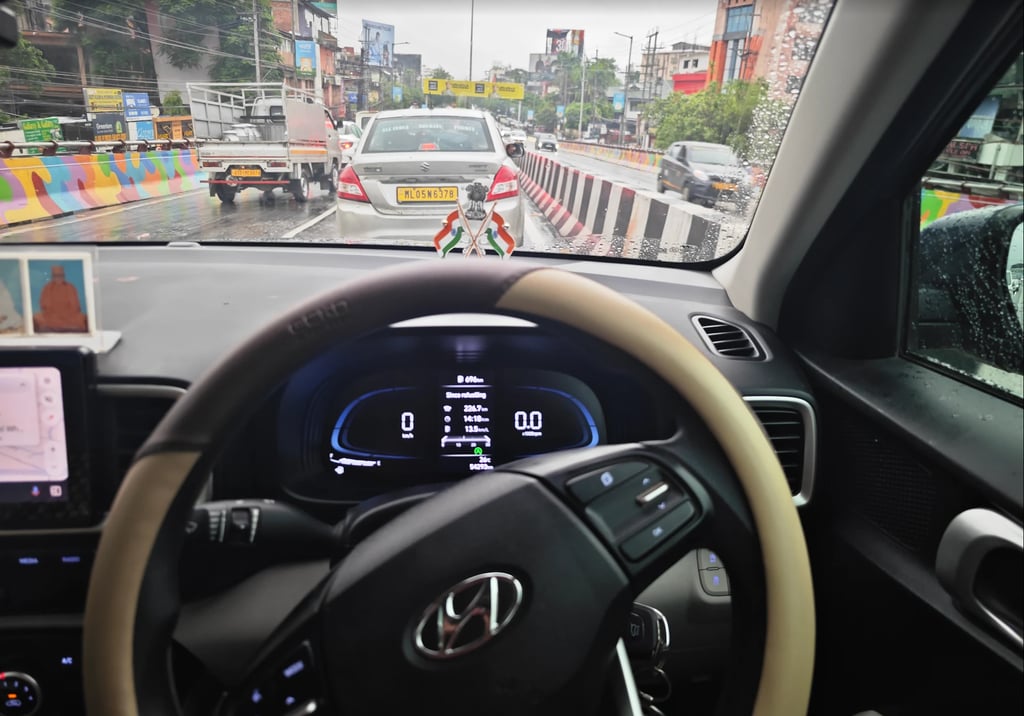
Modern BS6 vehicles are highly dependent on electronic systems for steering, braking, stability and safety. Steering Angle Sensor (SAS) calibration is a critical procedure required to ensure correct communication between mechanical wheel alignment and electronic control systems. In BS6 Stage 2 (RDE – Real Driving Emissions) vehicles, SAS calibration is mandatory and no longer optional.
WHAT IS STEERING ANGLE SENSOR (SAS)
Steering Angle Sensor measures the exact position, direction and speed of steering wheel movement. It identifies the straight-ahead position of the steering wheel and continuously sends data to multiple vehicle systems.
SAS DATA IS USED BY
ESC – Electronic Stability Control
TCS – Traction Control System
EPS – Electric Power Steering
ABS – Anti-lock Braking System
ADAS – Advanced Driver Assistance Systems
Electric Vehicle regenerative braking systems
In simple terms, SAS tells the vehicle what the driver intends to do.
WHAT IS YAW RATE SENSOR
Yaw Rate Sensor measures how fast and in which direction the vehicle is actually rotating around its vertical axis. It checks the real movement of the vehicle during turning, cornering or skidding.
STEERING ANGLE VS YAW RATE – SIMPLE UNDERSTANDING
Steering Angle Sensor shows driver intention
Yaw Rate Sensor shows actual vehicle movement
The vehicle continuously compares both values to confirm stable and safe driving.
ROLE OF YAW RATE SENSOR IN VEHICLE SAFETY
Yaw Rate Sensor works together with
Steering Angle Sensor
Wheel Speed Sensors
Lateral Acceleration Sensor
It plays a key role in
Electronic Stability Control
Traction Control
ADAS systems like Lane Assist and Emergency Steering Assist
HOW SAS AND YAW RATE SENSOR WORK TOGETHER
Driver turns steering wheel
SAS sends steering input data
Yaw Rate Sensor checks vehicle rotation
Wheel speed sensors monitor individual wheel movement
If all data matches, vehicle operates normally.
If data does not match, ESC intervenes by applying brake to individual wheels or reducing engine power.
WHY SAS CALIBRATION IS REQUIRED AFTER WHEEL ALIGNMENT
During wheel alignment or suspension work, toe, camber and caster angles are corrected. This changes the physical straight-ahead position of the wheels. However, the electronic steering reference stored in the vehicle does not update automatically.
SAS calibration resets the electronic reference so mechanical alignment and electronic systems work in perfect synchronization.
WHAT HAPPENS IF SAS CALIBRATION IS SKIPPED
Steering wheel not straight after alignment
Vehicle pulling left or right
Poor self-centring of steering
ESC or traction control warning lights
ADAS features malfunctioning or switching off
Incorrect braking or stability intervention
Uneven regenerative braking in electric vehicles
These problems are electronic and cannot be fixed by wheel alignment alone.
BS6 STAGE 1 VS BS6 STAGE 2 – WHY SAS CALIBRATION IS CRITICAL
BS6 Stage 1 vehicles have basic On-Board Diagnostics with lower sensor sensitivity. Minor mismatches are often ignored.
BS6 Stage 2 vehicles use advanced On-Board Diagnostics with real-time monitoring. Steering, braking, stability and emissions systems are fully interconnected. Even small mismatches between SAS and yaw rate sensor data are detected immediately.
WHY OBD SYSTEM IS ADVANCED IN BS6 STAGE 2
BS6 Stage 2 vehicles continuously cross-check data from
Steering Angle Sensor
Yaw Rate Sensor
Wheel Speed Sensors
Brake Pressure Sensors
This ensures real driving emission compliance, vehicle stability and safety. High sensor sensitivity allows early detection of faults and prevents unsafe driving conditions.
SAS CALIBRATION IN ELECTRIC VEHICLES
In electric vehicles, steering angle and yaw data are used to control regenerative braking. Incorrect SAS calibration can cause uneven braking feel, sudden regeneration cut-off and stability warnings. SAS calibration is a critical safety requirement for EVs.
WHEN SAS CALIBRATION IS MANDATORY
After wheel alignment
After suspension or steering repair
After steering rack or tie-rod replacement
When steering wheel is off-centre
When ESC or ADAS warning lights appear
After battery disconnection in many BS6 vehicles
HOW PROFESSIONAL SAS CALIBRATION IS DONE
Precision wheel alignment
Diagnostic scan tool connection
Reset of steering angle reference
ECU relearning procedure
ESC and ADAS validation
Road test confirmation
SAS calibration requires professional diagnostic equipment and cannot be done manually.
CUSTOMER FRIENDLY EXPLANATION
Wheel alignment corrects wheel position
SAS calibration corrects electronic steering reference
Yaw Rate Sensor verifies actual vehicle movement
All three must match for safe and stable driving.
ONE PITSTOP – BS6 STAGE 2 READY SERVICE
ONE PITSTOP provides precision wheel alignment and mandatory Steering Angle Sensor calibration for BS6 and BS6 Stage 2 vehicles. All vehicles are validated for ESC and ADAS performance and road tested for steering centring and stability.
GET IN TOUCH
ADDRESS
ONE PITSTOP
Sixmile, VIP Road, Opposite HDFC Bank
Guwahati, Assam – 781022
CONTACTS
Phone: +91-69008-99147 | +91-361-3528921
Email: info@one-pitstop.com
© 2025 ONE PITSTOP. All Rights Reserved.
Follow us